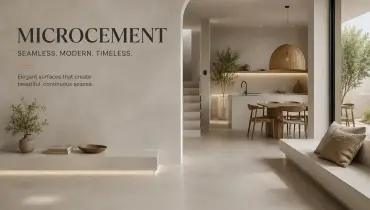
What Is Microcement? A Complete Guide to Microcement Floors, Walls & Interiors
Introduction
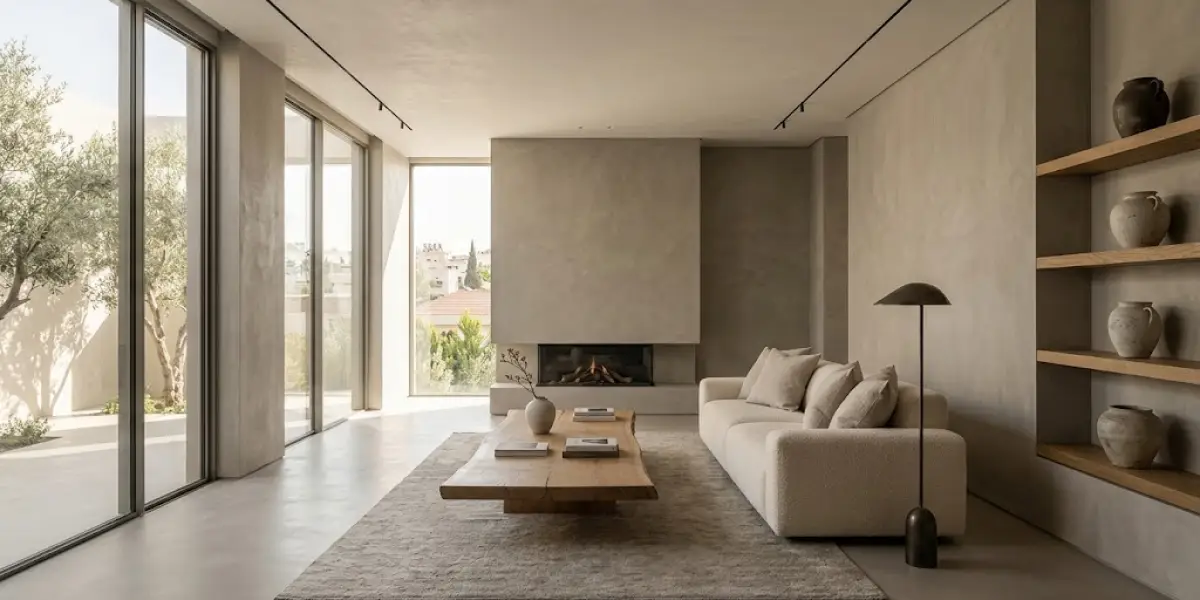
Modern interior design is increasingly moving toward surfaces that create continuity, simplicity, and a refined architectural appearance. Among the finishes gaining attention in contemporary interiors, microcement stands out for its seamless appearance, versatility, and ability to create a continuous visual language across different surfaces.
But what exactly is microcement? Where can it be used? And why are architects, interior designers, contractors, and homeowners choosing it for modern spaces?
In this guide, we explore the fundamentals of microcement, its applications, design possibilities, and the factors to consider when selecting a decorative surface finish.
What Is Microcement?
Microcement is a thin decorative cement-based coating system designed to create a continuous surface with minimal visible joints or interruptions.
Unlike traditional tiles and other finishes that are installed as separate pieces, microcement can create a more unified appearance across a surface. Its hand-applied nature also allows subtle variations in texture and tone, contributing to the character of the finished space.
Microcement can be incorporated into a variety of interior design concepts, from minimalist and contemporary spaces to warmer, more natural interiors.
Its appearance can vary depending on the application technique, color, texture, and final finish.
Why Is Microcement Popular in Modern Interiors?
The popularity of microcement is closely connected to the growing interest in seamless and visually continuous interiors.
Modern spaces often emphasize fewer visual interruptions, simple material palettes, and surfaces that allow architecture and furniture to become part of the overall composition.
Microcement can contribute to this approach by creating a continuous finish without the traditional visual grid associated with tile joints.
Seamless Visual Appearance
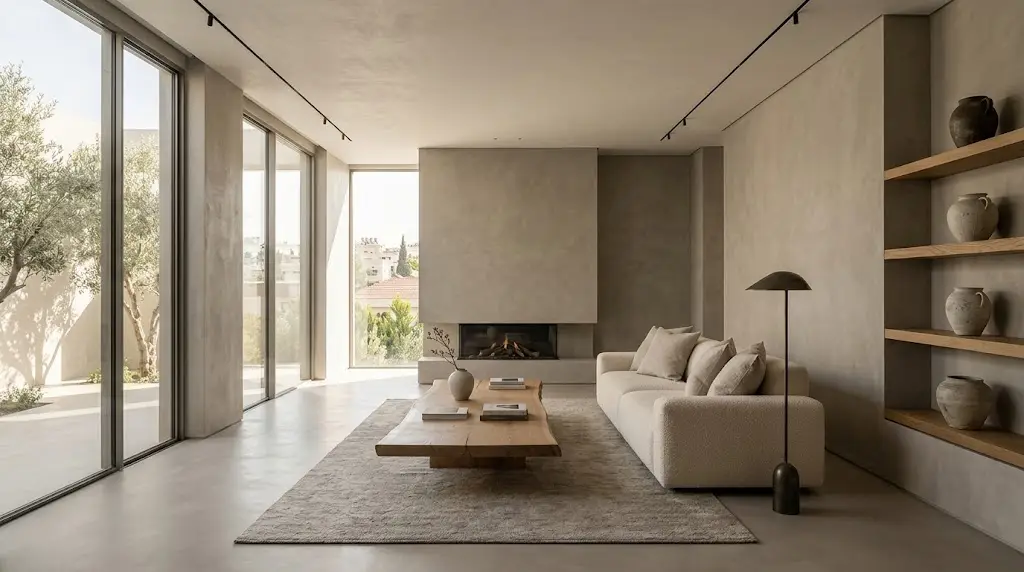
One of the defining characteristics of microcement is its ability to create a continuous surface.
This can help spaces appear visually calmer and more cohesive, particularly when the same or complementary finish is carried across multiple surfaces.
Versatile Design
Microcement is not limited to one particular interior style.
Depending on the selected color and texture, it can complement:
- Modern interiors
- Minimalist spaces
- Industrial design
- Japandi-inspired interiors
- Contemporary homes
- Commercial spaces
- Hospitality interiors
Wide Range of Colors
Microcement can be customized through different colors and finishing approaches.
Warm neutral shades, earthy tones, soft greys, and darker architectural colors can all create different atmospheres.
Current interior trends are also showing growing interest in warmer tones and more tactile, natural-looking surfaces rather than purely cold and uniform finishes.
Where Can Microcement Be Used?
One of the most interesting aspects of microcement is its range of potential applications.
Depending on the specific system and substrate, microcement can be considered for different areas of residential and commercial interiors.
Microcement Floors
Microcement flooring can create a continuous visual surface with fewer visible interruptions than traditional tiled flooring.
This makes it particularly interesting for open-plan interiors where designers want the floor to visually connect different areas.
It can be used in spaces such as:
- Living rooms
- Dining areas
- Bedrooms
- Retail spaces
- Offices
- Hospitality interiors
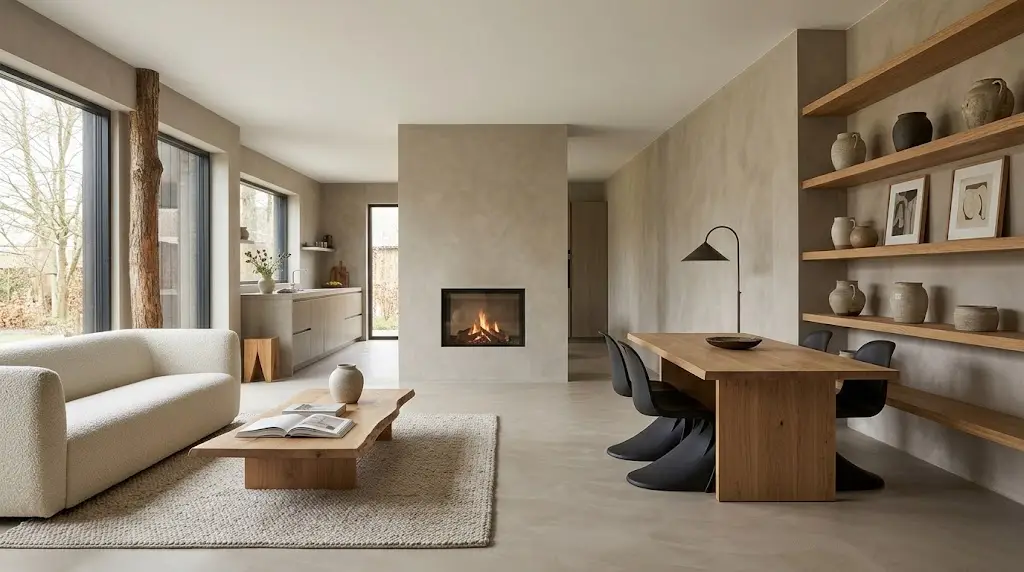
Microcement Walls
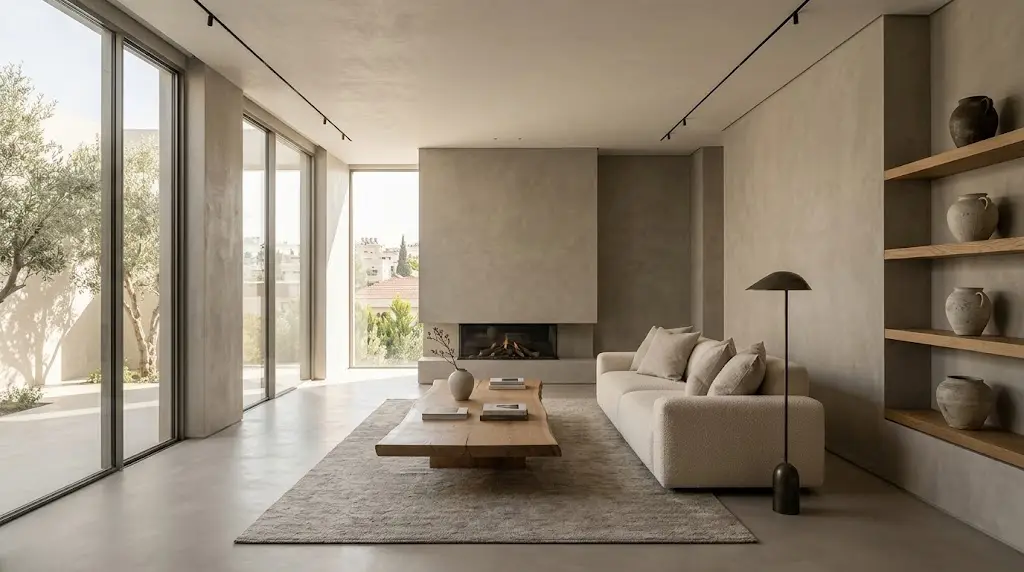
Microcement walls can be used to create feature surfaces or extend a consistent finish throughout an interior.
A textured or subtly tonal microcement wall can become an architectural feature without requiring additional decorative elements.
Feature walls are increasingly being used to introduce material character while maintaining a clean and uncluttered interior.
Microcement Bathrooms
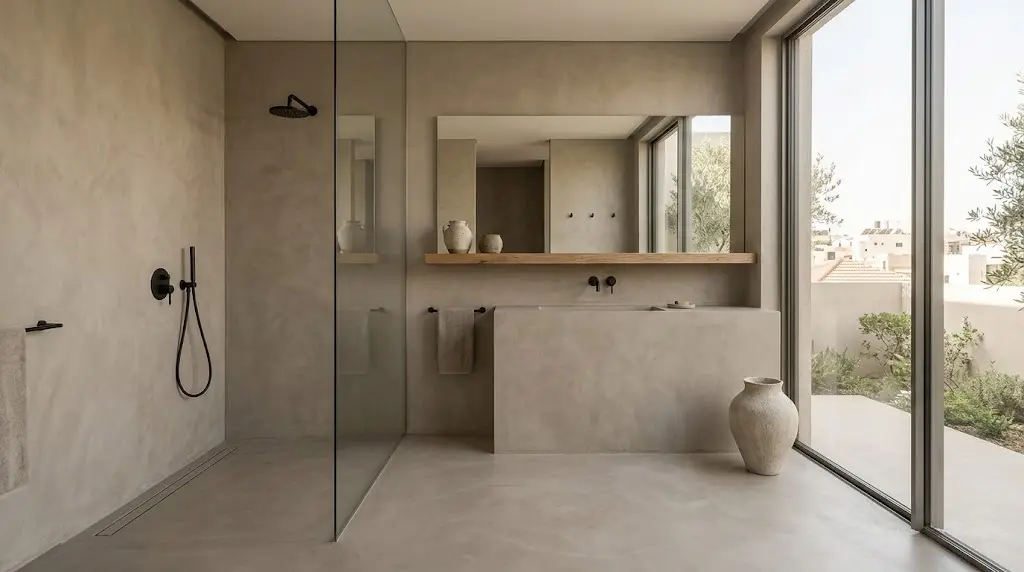
Bathrooms are another area where seamless decorative surfaces can have a strong visual impact.
Using a continuous finish across walls and floors can reduce the visual interruption created by multiple tile patterns and grout lines.
For wet areas, however, the complete specification of the system—including substrate preparation, waterproofing where required, compatible layers, and protective finishes—is essential.
Microcement Kitchens
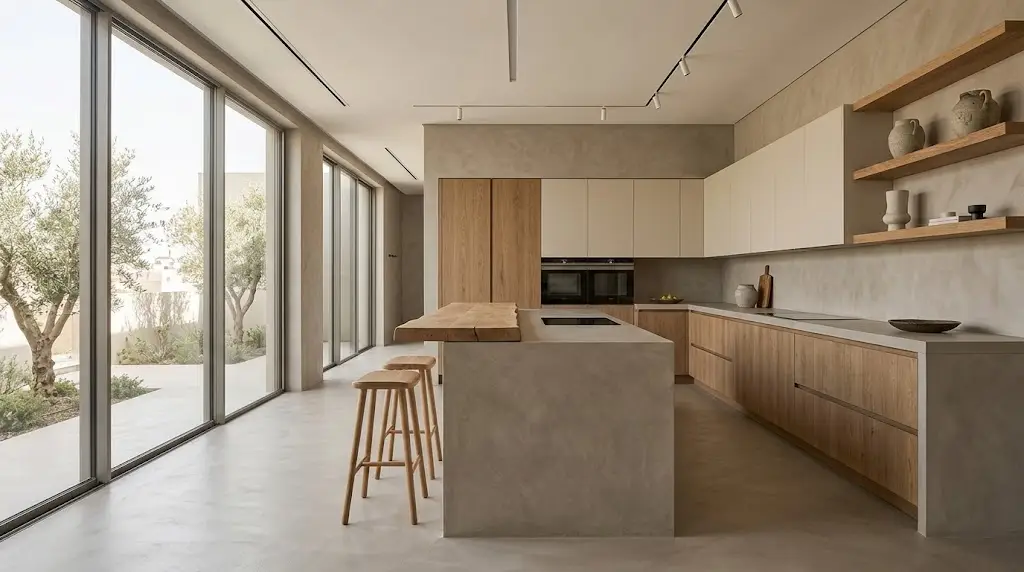
Microcement can also contribute to contemporary kitchen designs.
It can be considered for selected walls, floors, counters, and other surfaces depending on the product system and technical requirements.
The neutral and continuous appearance can work particularly well alongside wood, stone, metal, and minimalist cabinetry.
Microcement on Furniture and Built-In Elements
Microcement-style finishes can also be incorporated into selected furniture and architectural elements.
This creates opportunities to visually connect furniture with surrounding walls or floors and create a more integrated interior concept.
Microcement and Modern Interior Design
Microcement is particularly compatible with design approaches that prioritize simplicity and material continuity.
Instead of combining many different surface materials, designers can use one finish to visually connect several areas of a space.
For example, a project could incorporate a similar finish across:
- Floor surfaces
- Feature walls
- Bathroom walls
- Built-in furniture
- Selected architectural elements
This approach can create a more unified visual identity.
Microcement for Warm Minimalist Interiors
Minimalism does not necessarily have to mean cold or sterile interiors.
Recent design trends increasingly emphasize warmth, natural textures, muted colors, and tactile surfaces. Decorative concrete and microcement can work within this direction when paired with appropriate colors, lighting, wood, textiles, and natural materials.
For example, a warm beige or sand-toned finish combined with natural wood and soft lighting can create a very different atmosphere from a dark grey industrial interior.
The material remains similar, but the design language changes through color, texture, lighting, and surrounding elements.
Microcement vs. Traditional Tiles
Microcement and traditional tiles create very different visual effects.
Traditional tiles introduce individual pieces, patterns, grout lines, and clearly defined boundaries.
Microcement focuses instead on continuity and a more monolithic appearance.
Traditional Tiles
- Individual tile pieces
- Visible grout lines
- Many patterns and sizes
- Large range of decorative styles
- Established installation methods
Microcement
- Continuous visual appearance
- Minimal visible joints
- Hand-applied character
- Flexible aesthetic possibilities
- Suitable for contemporary design concepts
Neither approach is universally suitable for every project.
The right choice depends on the design objective, substrate, technical requirements, installation system, maintenance expectations, and overall project specification.
What Should You Consider Before Choosing Microcement?
Although microcement can offer an attractive design solution, choosing the right system is an important part of achieving a successful result.
Surface Preparation
The condition and preparation of the substrate are critical.
The surface should be assessed and prepared according to the requirements of the selected system.
Application
Microcement is a finish where application technique matters.
The final appearance can be influenced by the applicator, layering process, tools, texture, and finishing technique.
Color Selection
The selected color can significantly change the character of the interior.
Consider the relationship between the microcement finish and:
- Natural light
- Artificial lighting
- Furniture
- Wood
- Metal
- Stone
- Textiles
- Architectural elements
Protective Finish
The final protective system should be compatible with the intended application and the microcement system being used.
For surfaces exposed to moisture, traffic, stains, or frequent cleaning, selecting the appropriate protective solution is particularly important.
How to Achieve a High-Quality Microcement Finish
A successful microcement project involves more than simply selecting a beautiful color.
The overall process should consider:
- Substrate preparation
- Compatible base layers
- Correct application
- Consistent technique
- Appropriate drying or curing conditions
- Final surface treatment
- Suitable protection for the intended use
Each stage contributes to the final appearance and performance of the surface.
For this reason, professional application and following the technical instructions of the selected product system are important.
Microcement for Residential Projects
Microcement can be incorporated into many residential design concepts.
In living rooms, it can contribute to a calm architectural background.
In bathrooms, it can support a continuous surface concept.
In kitchens, it can complement contemporary cabinetry and natural materials.
In bedrooms, warm neutral colors can create a softer interpretation of the material.
The result depends not only on the microcement itself but also on how it interacts with the rest of the interior.
Microcement for Commercial and Hospitality Spaces
The same design principles can be applied to commercial projects.
Restaurants, cafés, boutiques, offices, hotels, and other hospitality environments often require surfaces that contribute to a strong visual identity.
Microcement can help designers create a consistent material language across different areas of a project.
The final specification should always take into account the expected traffic, cleaning requirements, moisture exposure, substrate conditions, and other technical considerations.
Choosing the Right Color for Microcement
Color is one of the most important decisions in a decorative surface project.
Light Neutral Colors
Light beige, cream, and soft grey can create a bright and calm atmosphere.
Warm Earthy Colors
Sand, taupe, and other earthy tones can create a warmer and more natural appearance.
Dark Colors
Charcoal and deeper grey tones can create a stronger architectural and contemporary atmosphere.
Combining Colors
Using complementary shades across different surfaces can add depth without making the space visually busy.
The best color depends on the architecture, lighting, furniture, and overall design concept.
Is Microcement Right for Your Project?
Microcement can be an interesting option when the goal is to create a modern, continuous, and visually refined surface.
However, every project is different.
Before choosing a microcement system, consider:
- The type of surface
- Existing substrate
- Indoor or outdoor application
- Moisture exposure
- Expected traffic
- Desired texture
- Desired color
- Maintenance requirements
- Installation method
- Protective system
A properly specified system can help ensure that the decorative finish is appropriate for its intended application.
Microcement as a Design Material
Microcement is more than a surface coating.
When incorporated thoughtfully, it can become part of the architectural language of a space.
Its continuous appearance allows designers to create backgrounds that do not compete with furniture, lighting, artwork, or architectural details.
At the same time, changes in color, texture, and application technique can give the material its own visual character.
This balance between simplicity and texture is one reason decorative cement-based finishes continue to attract attention in contemporary interior design.
Explore Decorative Finishing Solutions with Decorete
Choosing the right decorative finishing system is an important step in creating a successful interior or architectural project.
Decorete provides finishing solutions and materials for decorative surfaces, concrete applications, and architectural finishing projects.
Whether you are working on a residential interior, commercial space, hospitality project, or architectural application, understanding the material, substrate, application process, and finishing requirements can help you make better project decisions.
Explore Decorete's range of finishing solutions and discover different possibilities for creating modern, durable, and visually distinctive surfaces.
Conclusion
Microcement offers designers, architects, contractors, and homeowners an opportunity to create modern surfaces with a continuous and refined appearance.
From floors and walls to bathrooms, kitchens, and selected architectural elements, its versatility allows it to work across a wide range of interior concepts.
The key to a successful result is not simply choosing microcement, but selecting the appropriate system, preparing the surface correctly, applying it carefully, and using a compatible protective finish for the intended application.
As modern interiors continue to explore seamless surfaces, natural textures, warm neutral colors, and simplified material palettes, microcement remains a versatile option for contemporary design.
Decorete — Finishing Materials for Modern Spaces.