Microcement: Complete Guide to Microcement Flooring, Walls & Finishes
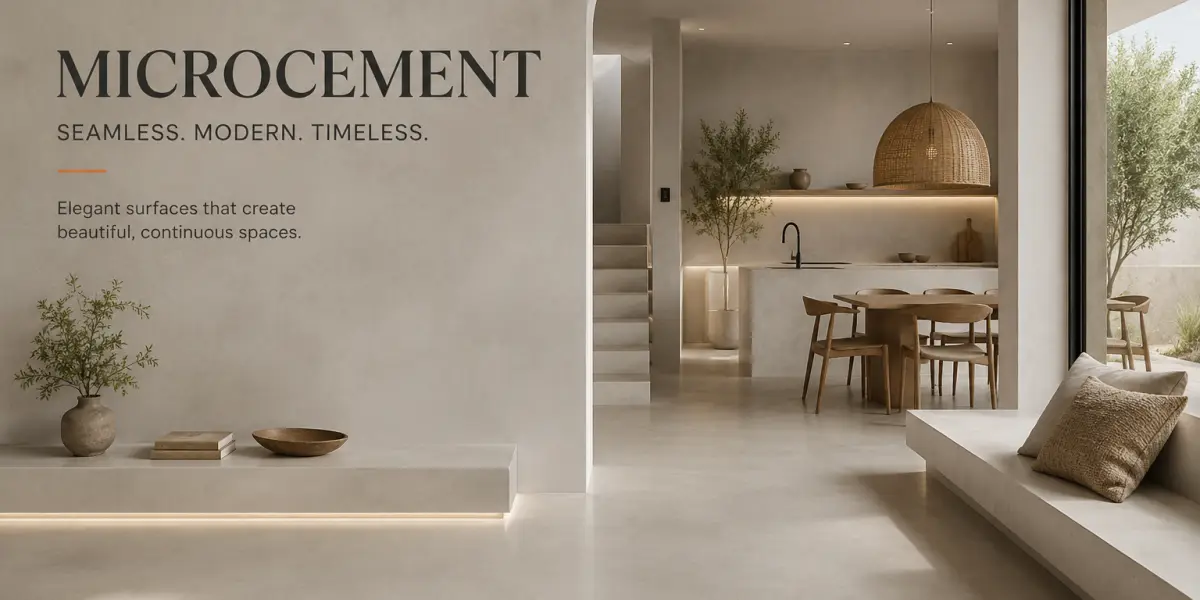
Microcement is a modern decorative surface finish used to create seamless floors, walls, bathrooms, kitchens, countertops and other architectural surfaces. Its smooth appearance, minimal joints and wide range of colours and textures have made microcement increasingly popular in modern interior design and renovation projects.
Whether you are considering microcement for your home in Jordan, looking for a modern alternative to tiles, or want to understand how microcement is applied, this guide explains what microcement is, where it can be used, its benefits, finishes, application system and important considerations before starting a project.
What Is Microcement?
Microcement is a thin decorative cement-based coating that can be applied over a variety of properly prepared surfaces. Unlike traditional concrete, microcement is designed as a decorative finishing system rather than a structural material.
One of its main characteristics is its ability to create a continuous, seamless surface with minimal visible joints.
Microcement can be used to achieve a modern architectural appearance while allowing designers to work with different colours, textures and finishes.
It is commonly used for:
- Microcement floors
- Microcement walls
- Microcement bathrooms
- Microcement kitchens
- Microcement countertops
- Shower areas
- Staircases
- Ceilings
- Commercial interiors
- Decorative architectural surfaces
Why Is Microcement Popular?
One of the main reasons for the growing popularity of microcement is its minimalist appearance.
Traditional tiled surfaces contain grout lines that visually divide the surface. Microcement creates a more continuous appearance, which can make spaces feel cleaner and more spacious.
It is particularly suitable for contemporary, minimalist, industrial and Scandinavian-inspired interiors.
Microcement can also be applied in different colours and textures, allowing the final surface to be customised according to the design of the space.
Where Can Microcement Be Used?
Microcement Floors
Microcement flooring creates a continuous decorative surface suitable for modern residential and commercial interiors.
It can be used in:
- Living rooms
- Bedrooms
- Kitchens
- Hallways
- Offices
- Retail spaces
- Restaurants
- Showrooms
The final appearance can range from smooth and refined to more textured and natural depending on the chosen finish and application technique.
Microcement Walls
Microcement walls can create a modern architectural finish without the visual interruption of traditional tiles or multiple materials.
It can be used on feature walls, living areas, bedrooms, bathrooms and commercial interiors.
Microcement Bathrooms
Bathrooms are one of the most popular applications for microcement.
Microcement can be applied to:
- Bathroom walls
- Bathroom floors
- Shower areas
- Vanity areas
- Decorative surfaces
When used as part of a properly designed and sealed system, microcement can provide a continuous decorative surface suitable for wet-area applications.
The waterproofing and protective layers are particularly important in bathrooms and shower areas.
Microcement Kitchens
Microcement can be used on kitchen walls, floors, backsplashes and selected countertop applications.
Its seamless appearance can help create a clean and contemporary kitchen design.
Microcement Ceilings
Microcement is not limited to floors and walls. It can also be used on ceilings to create a continuous architectural finish throughout an interior.
What Does Microcement Look Like?
Microcement can have different visual appearances depending on the material, application technique, colour and protective finish.
Common finishes include:
- Smooth microcement
- Fine microcement
- Textured microcement
- Concrete-look finishes
- Matte finishes
- Satin finishes
- Decorative polished finishes
The subtle variations created during application are part of the character of microcement and can give each surface a unique appearance.
Microcement Colours
Microcement is available in a wide range of colours, from natural neutral tones to darker contemporary shades.
Popular choices include:
- White
- Off-white
- Beige
- Sand
- Greige
- Light grey
- Dark grey
- Charcoal
- Earth tones
The colour can significantly affect the atmosphere of the finished space. Warm neutral colours can create a softer appearance, while darker grey tones can produce a stronger architectural look.
How Is Microcement Applied?
A professional microcement system normally consists of several layers rather than one single coat.
The exact system can vary depending on the substrate, product manufacturer and intended application.
A typical system may include:
1. Prepared Substrate
The existing surface must be properly prepared, clean, stable and suitable for receiving the microcement system.
2. Fiberglass Mesh
A fiberglass reinforcement mesh may be incorporated into the system to help reinforce the base layer and provide a suitable foundation for the decorative coats.
3. Base Coat
The base microcement layer establishes the foundation of the system and helps create a suitable surface for the following coats.
4. Microcement Coats
Additional microcement coats are applied to build the final surface, texture and appearance.
Application technique plays an important role in the final decorative effect.
5. Protective Topcoat
A protective topcoat is applied over the finished microcement surface.
This final layer is particularly important because it helps protect the decorative surface from everyday use, moisture and staining.
For bathrooms, showers and other wet areas, the complete system should be designed and installed according to the manufacturer's specifications.
Can Microcement Be Applied Over Tiles?
In some renovation applications, microcement systems can be installed over existing tiles, provided that the substrate is properly assessed and prepared.
The existing tiles must be stable, properly bonded and free from movement or significant defects.
Joints, uneven areas, cracks and other substrate issues may need to be addressed before applying the microcement system.
This can make microcement an attractive option for renovation projects because it may allow an existing surface to be transformed without completely removing the original finish.
However, suitability should always be assessed before installation.
Benefits of Microcement
Seamless Appearance
Microcement can create a continuous surface with minimal visible joints.
Modern Architectural Finish
Its natural concrete-inspired appearance works particularly well with contemporary interior design.
Versatile Application
Microcement can be used on floors, walls, bathrooms, kitchens, ceilings and other architectural surfaces.
Wide Range of Colours
Different colours and finishes allow the material to be adapted to different design concepts.
Suitable for Renovation
Depending on the existing substrate, microcement can sometimes be applied over existing surfaces, making it useful for renovation projects.
Customisable Texture
Application techniques can create different levels of smoothness and texture.
Easy to Combine With Other Materials
Microcement works well alongside materials such as:
- Natural stone
- Wood
- Metal
- Glass
- Marble
- Ceramic
- Travertine
This makes it particularly useful for contemporary interior design.
Microcement vs Traditional Tiles
Both microcement and tiles can be suitable for different projects.
Microcement offers a continuous, minimalist appearance, while tiles provide visible joints and a much wider variety of individual patterns and formats.
Microcement may be preferred when the design goal is a seamless architectural surface.
Tiles may be more appropriate when a project requires specific tile patterns, traditional styles or individually replaceable units.
The best choice depends on the design, substrate, location, budget and installation requirements.
Is Microcement Waterproof?
Microcement itself should not simply be considered a waterproofing system.
For areas exposed to significant moisture, such as bathrooms and showers, the complete construction system must include appropriate waterproofing and protective layers.
The microcement finish and protective topcoat work as part of the overall system.
Correct substrate preparation, waterproofing, application and sealing are essential for achieving a suitable result in wet areas.
Is Microcement Suitable for Outdoor Areas?
Microcement systems can be designed for certain outdoor applications, depending on the specific product system and environmental conditions.
Outdoor surfaces are exposed to weather, temperature changes, moisture and heavier wear, so the selected microcement system must be specifically suitable for the intended application.
Always check the manufacturer's technical recommendations before using microcement outdoors.
How Long Does Microcement Last?
The lifespan of a microcement surface depends on several factors, including:
- Quality of the materials
- Substrate preparation
- Application technique
- Number of layers
- Protective topcoat
- Level of daily use
- Maintenance
- Environmental conditions
Professional installation and correct system selection are important for achieving a durable finished surface.
Microcement in Jordan
Microcement is increasingly suitable for modern residential, commercial and hospitality projects in Jordan where designers and property owners are looking for contemporary seamless finishes.
It can be used in homes, villas, apartments, restaurants, hotels, offices, retail spaces and other architectural projects.
For Jordanian projects, selecting a suitable system for the local environment and intended application is important, particularly for outdoor areas, bathrooms and other high-use surfaces.
Choosing the Right Microcement System
Before starting a microcement project, consider:
Where will it be used?
Floor, wall, bathroom, kitchen, shower, ceiling or outdoor surface.
What finish do you want?
Smooth, textured, matte, satin or concrete-look.
What colour suits the space?
Choose a colour that works with the architecture, lighting and other materials.
What is the existing substrate?
The substrate must be inspected and prepared before application.
Will the surface be exposed to water?
Bathrooms, showers and wet areas require appropriate waterproofing and protective systems.
Who will install it?
Microcement is a decorative application system where preparation and technique have a major impact on the final result.
Final Thoughts
Microcement offers architects, designers, contractors and homeowners a versatile way to create modern seamless surfaces across a wide range of applications.
From microcement bathrooms and kitchens to floors, walls and commercial interiors, the material can combine a minimalist architectural appearance with different colours, textures and finishes.
The key to a successful microcement project is not simply the decorative material itself. The complete system matters — including substrate preparation, reinforcement, base coats, decorative coats, waterproofing where required, and the final protective topcoat.
For projects in Jordan, choosing the right microcement system and applying it correctly can help create a distinctive contemporary surface designed around the requirements of the space.