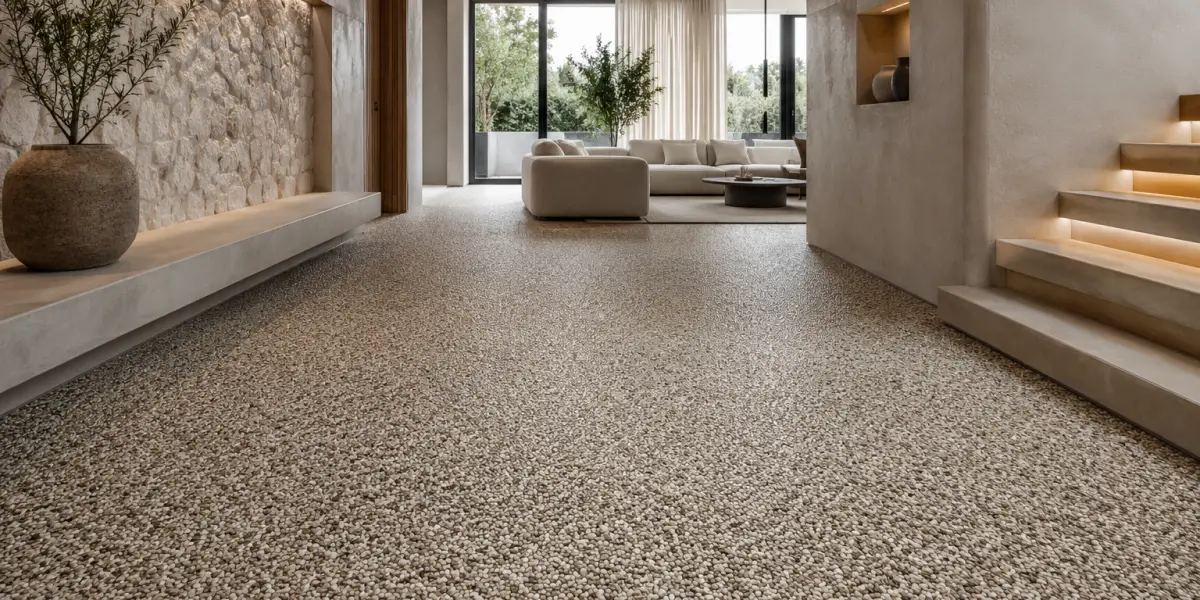
Stone Carpet: A Modern Decorative Flooring Solution for Interior and Exterior Spaces
When choosing a flooring finish, appearance is only one part of the decision. Durability, texture, maintenance, application, and the overall character of the space all play an important role.
Stone carpet is a decorative flooring solution that combines natural stone aggregates with a resin-based binder to create a distinctive continuous surface. The result is a textured, contemporary finish that can be used in a wide range of residential, commercial, and architectural applications.
For designers, contractors, and property owners looking for an alternative to conventional flooring finishes, stone carpet offers an interesting combination of visual appeal and practical performance.
What Is Stone Carpet?
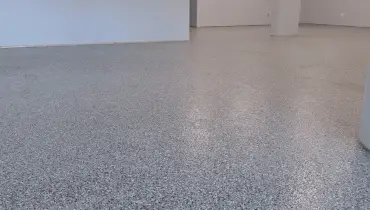
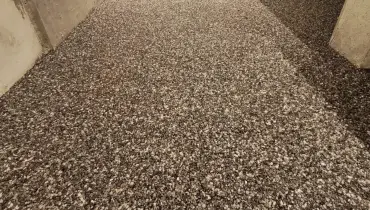
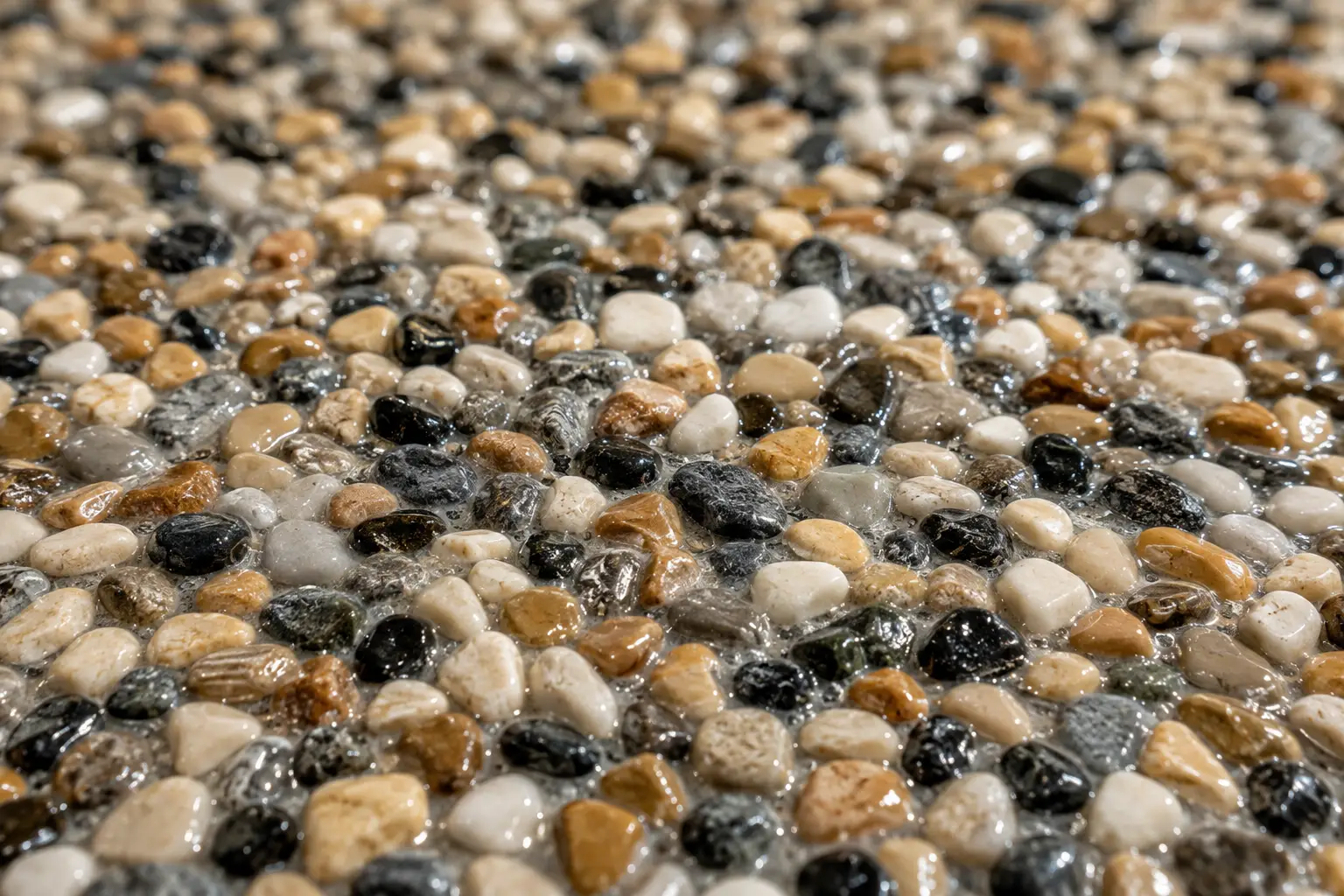
Stone carpet is a flooring system made by combining selected decorative stone or natural aggregate with a suitable resin binder. The mixture is applied to a prepared surface and finished to create a relatively seamless decorative layer.
Unlike conventional ceramic tiles, stone carpet does not rely on individual tile pieces and grout lines to create its appearance. Instead, the aggregate becomes part of a continuous decorative surface.
The size, color, and type of aggregate can influence the final appearance, allowing different combinations to be created for different architectural styles.
Why Is Stone Carpet Becoming Popular?
Modern architecture often favors materials that create a strong visual identity while maintaining a clean and continuous appearance.
Stone carpet fits naturally into this approach because its aggregate texture gives the floor a distinctive appearance without requiring complicated patterns or decorative elements.
Some of the key characteristics that make stone carpet attractive include:
- Natural appearance: The visible stone aggregate creates an organic, textured look.
- Contemporary finish: Suitable for modern and minimalist architectural concepts.
- Design flexibility: Different aggregate colors and sizes can produce different visual effects.
- Continuous appearance: Creates a surface without the repetitive pattern of traditional tiles.
- Wide application potential: Can be considered for various interior and exterior surfaces.
- Decorative functionality: Combines the visual role of a decorative finish with the practical function of flooring.
Where Can Stone Carpet Be Used?
One of the advantages of stone carpet is its versatility. Depending on the specific system, substrate, and environmental conditions, it can be used across different types of projects.
Interior Flooring
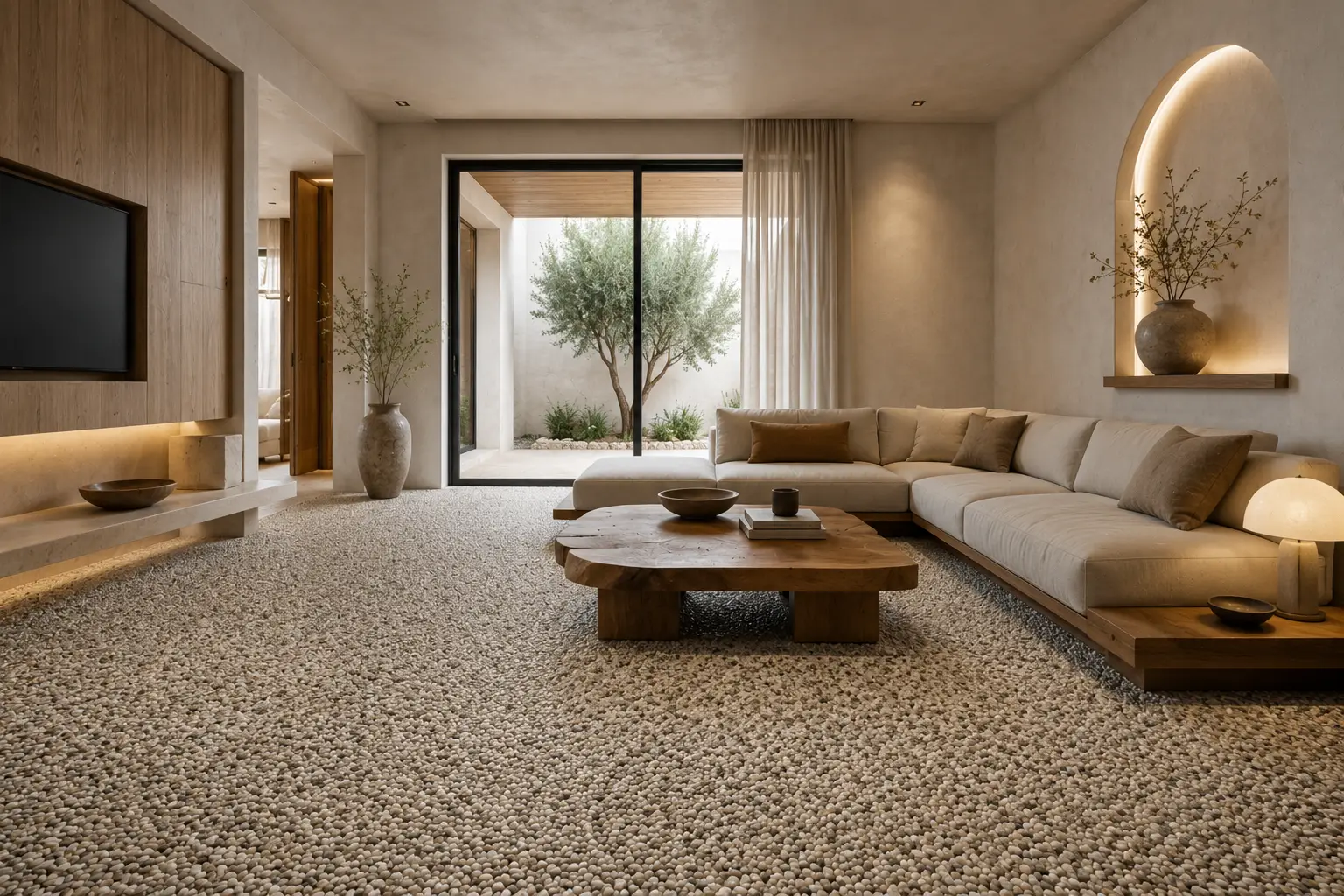
Stone carpet can be used in residential interiors where a textured, natural-looking floor is desired.
It can complement materials such as:
- Natural wood
- Concrete
- Microcement
- Metal
- Glass
- Natural stone
This makes it suitable for contemporary homes, entrance areas, living spaces, corridors, and other interior applications.
Commercial Spaces
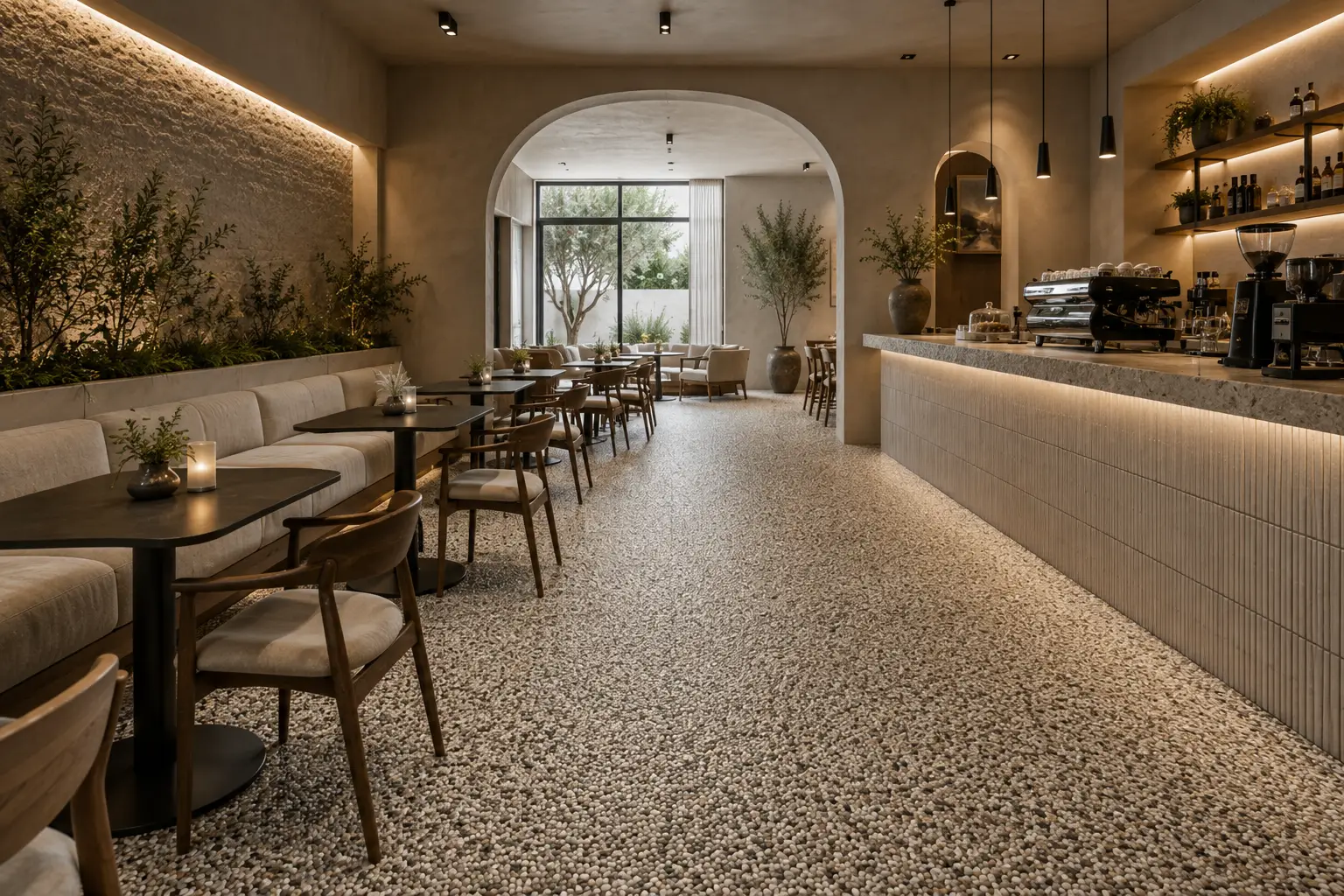
Restaurants, cafés, offices, boutiques, showrooms, and hospitality environments can use decorative flooring to strengthen the character of their interiors.
A stone carpet surface can contribute to a cohesive design concept while providing an alternative to conventional tile flooring.
Outdoor Areas
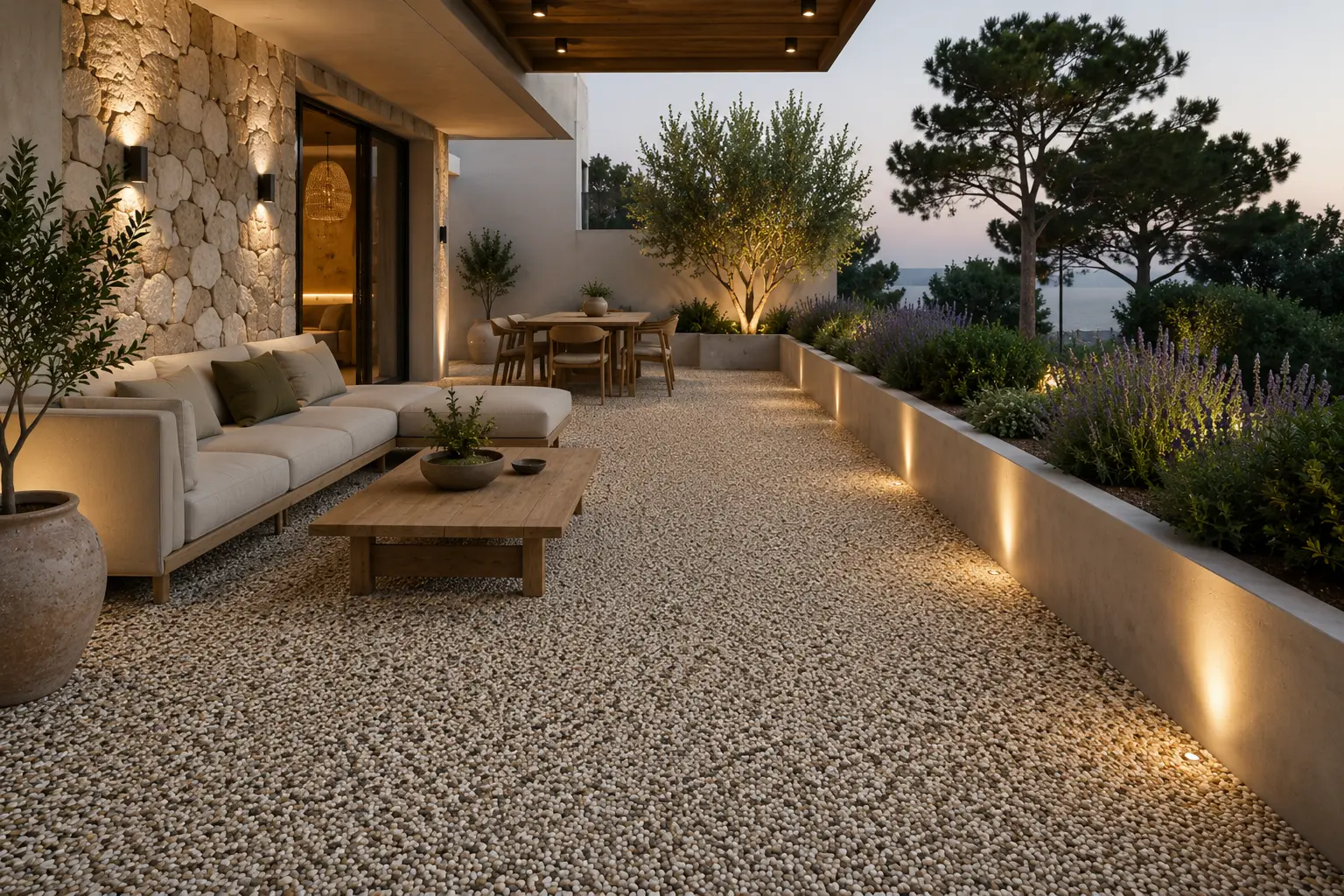
Stone-based decorative surfaces can also be considered for selected outdoor applications, depending on the specifications of the complete flooring system.
Potential applications may include terraces, patios, walkways, entrances, and other architectural areas where a textured decorative finish is desired.
For exterior use, factors such as weather exposure, substrate condition, drainage, UV exposure, and the manufacturer's recommendations should always be considered.
The Importance of Choosing the Right Aggregate
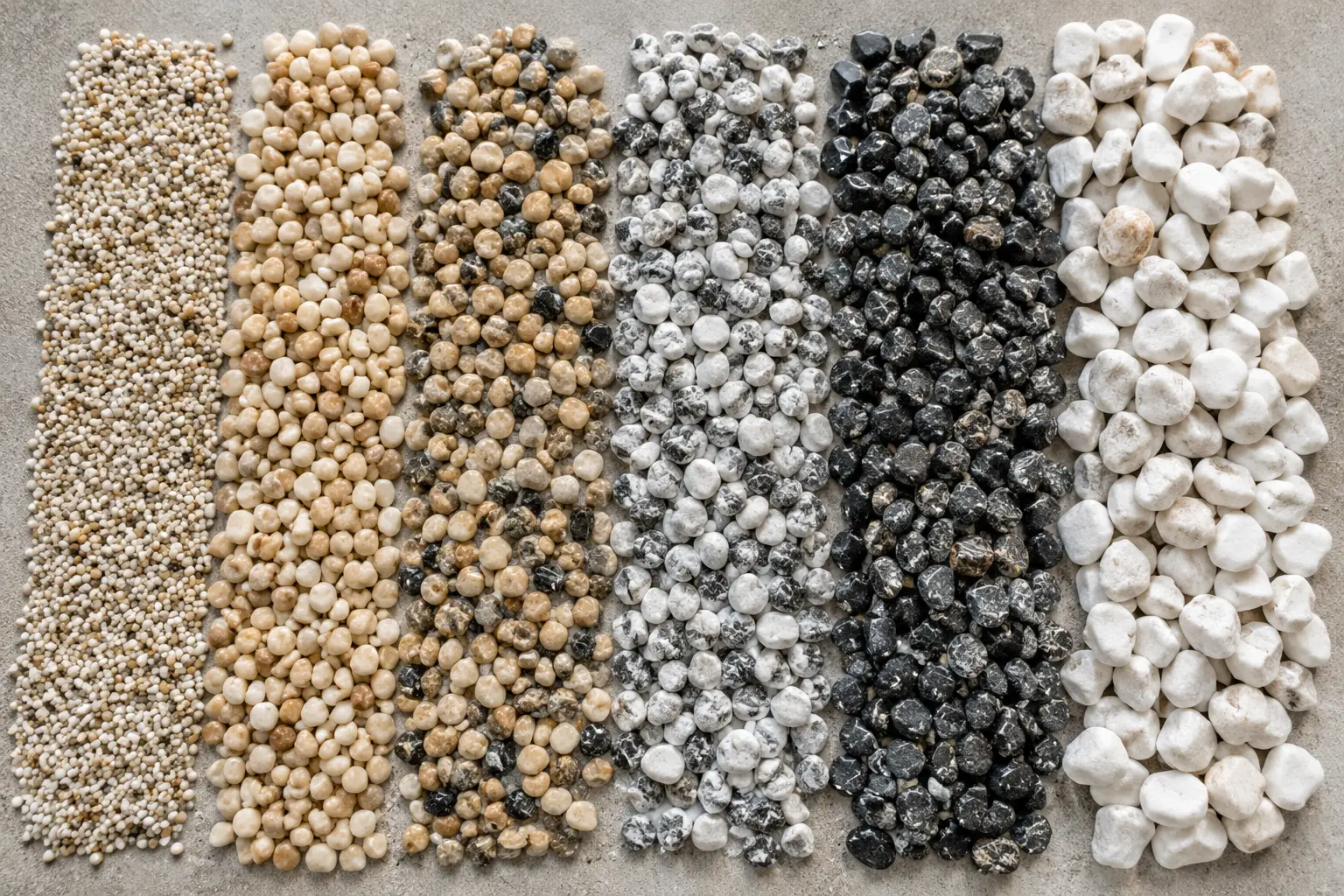
The aggregate is one of the most visible elements of a stone carpet system, so its selection has a major impact on the final design.
Different stones can vary in:
- Color
- Size
- Shape
- Texture
- Natural variation
Smaller aggregates can create a finer visual texture, while larger aggregates can produce a more pronounced stone appearance.
Color combinations can also be used to create subtle neutral floors or more distinctive decorative surfaces.
For architectural projects, it is often useful to prepare a sample before applying the complete system. This allows the designer or client to evaluate the actual aggregate, color, texture, and overall appearance under the project's lighting conditions.
Surface Preparation Is Essential
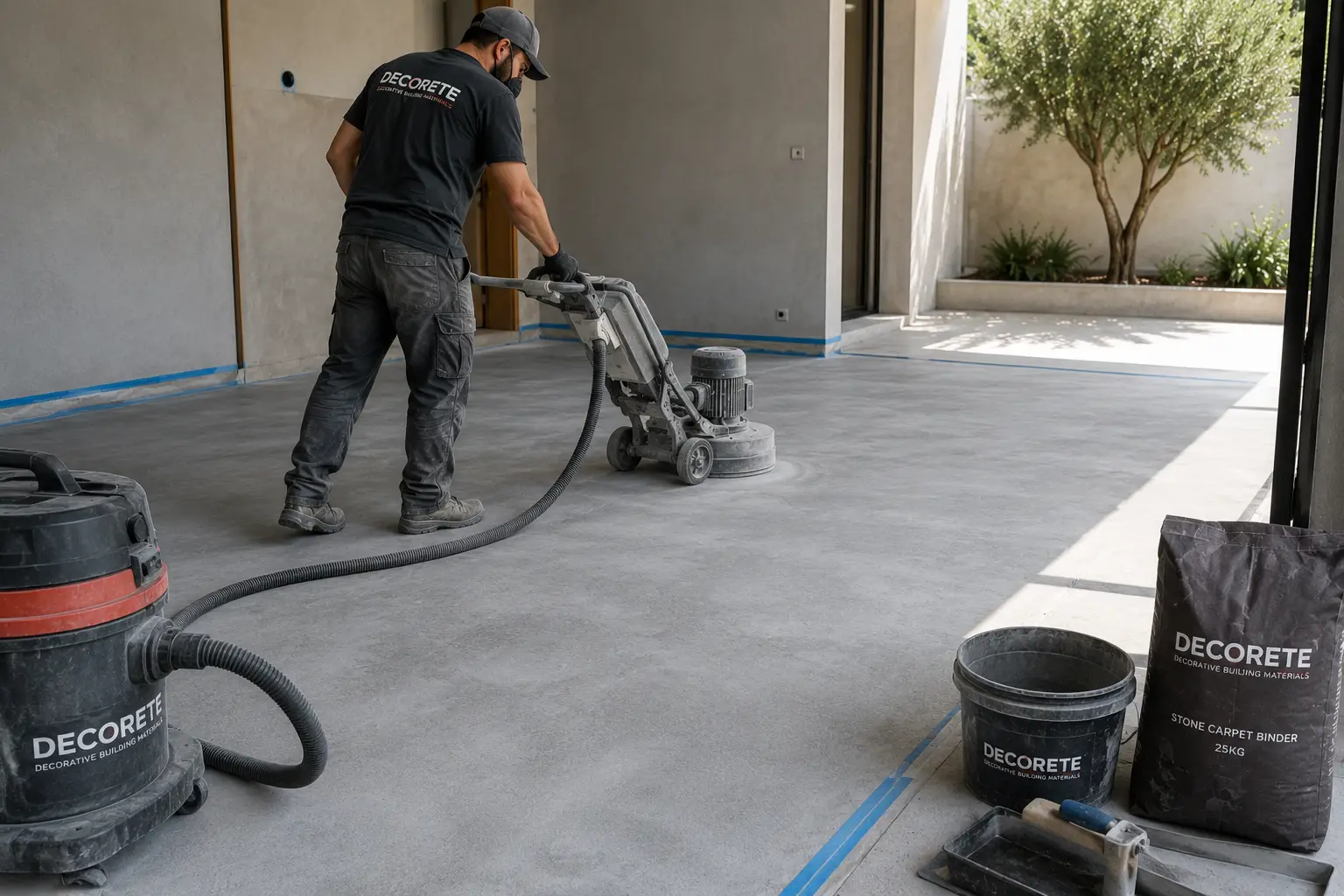
As with many decorative flooring systems, preparation of the substrate is critical.
Before installing a stone carpet system, the existing surface should be properly evaluated and prepared according to the product specifications.
The substrate should generally be:
- Clean
- Stable
- Dry and suitable for the selected system
- Free from loose material
- Properly prepared for adhesion
- Free from unresolved structural or moisture problems
Unevenness, cracks, contamination, or unsuitable substrate conditions can negatively affect the final result.
A high-quality decorative flooring material cannot compensate for poor preparation.
Stone Carpet vs. Traditional Tile Flooring
Stone carpet and tile flooring offer very different visual characteristics.
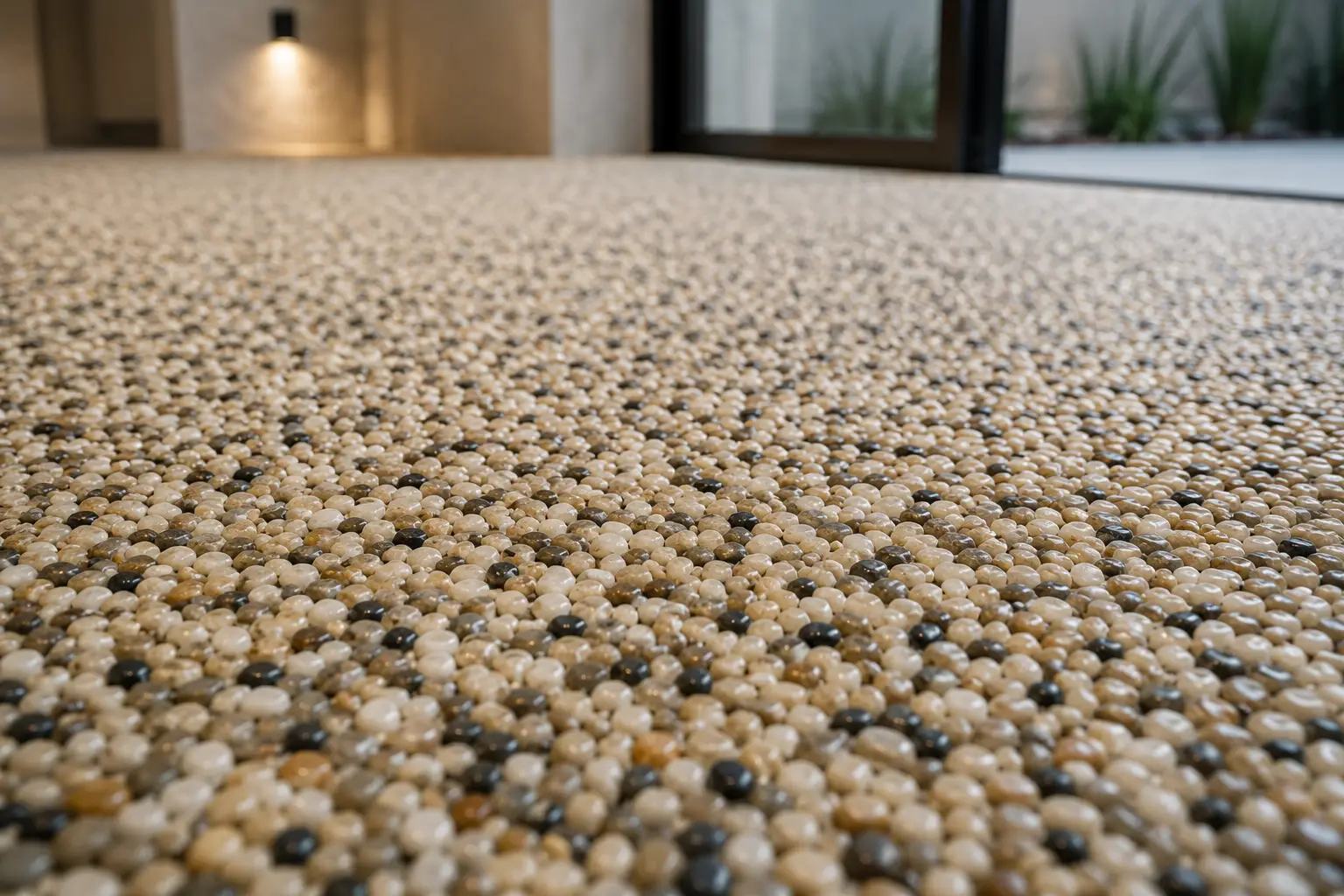
Tiles create a structured appearance through individual pieces, joints, patterns, and grout lines. Stone carpet, on the other hand, creates a more continuous decorative surface where the aggregate itself becomes part of the visual design.
This makes stone carpet particularly interesting for projects aiming for:
- Minimalist interiors
- Natural material aesthetics
- Contemporary architecture
- Textured surfaces
- Seamless-looking decorative flooring
The right choice ultimately depends on the project's design requirements, technical conditions, budget, and expected use.
How to Achieve a Professional Result
The quality of a stone carpet installation depends on more than the final material.
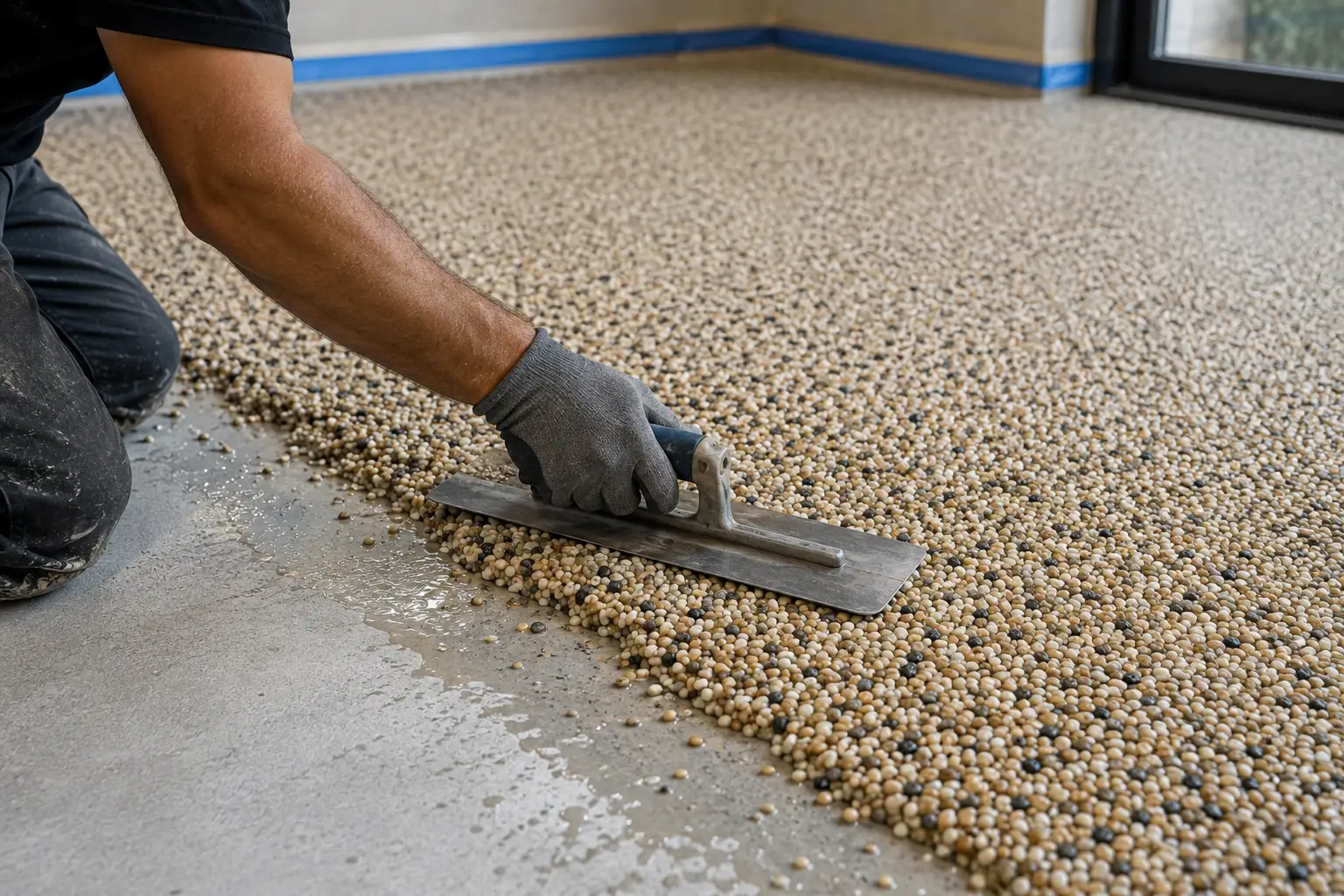
A professional installation should consider the entire system, from substrate preparation through mixing, application, finishing, and curing.
Important considerations include:
1. Prepare the Substrate
Ensure that the surface is properly prepared and compatible with the flooring system.
2. Select the Appropriate Aggregate
Choose the stone type, size, and color according to the desired aesthetic and project requirements.
3. Follow the Correct Mixing Ratio
The aggregate and binder should be combined according to the manufacturer's specified system and proportions.
4. Apply Evenly
Consistent application helps achieve a uniform thickness and appearance across the surface.
5. Pay Attention to Edges and Transitions
Corners, edges, joints, drains, thresholds, and transitions require careful detailing to achieve a professional finish.
6. Allow Proper Curing
The surface should be given sufficient time to cure according to the technical requirements of the system before heavy use.
Is Stone Carpet Suitable for Your Project?
Stone carpet can be an excellent choice when the goal is to combine decorative texture with a natural stone appearance.
However, the correct flooring solution depends on the specific project. Before selecting a system, consider:
Location: Is the surface indoors or outdoors?
Traffic: Will it be exposed to light residential use or heavy commercial traffic?
Substrate: Is the existing surface suitable for the system?
Design: What color, aggregate size, and texture are required?
Environment: Will the surface be exposed to moisture, sunlight, temperature changes, or chemicals?
Maintenance: What level of cleaning and maintenance will the space require?
Answering these questions helps determine whether stone carpet is the right solution and which system is most appropriate.
Stone Carpet for Modern Architectural Design
One of the strongest qualities of stone carpet is its ability to bridge the gap between function and aesthetics.
Instead of treating flooring as a background element, designers can use the floor itself as part of the architectural language of the space.
Natural aggregate can introduce warmth and texture into minimalist interiors. Neutral stone colors can complement modern furniture, while contrasting aggregates can define specific areas within a larger space.
This flexibility makes stone carpet an interesting option for projects where the flooring needs to contribute to the overall visual identity.
Why Choose Decorete?
For decorative flooring and surface projects, material selection is an important part of achieving a professional result.
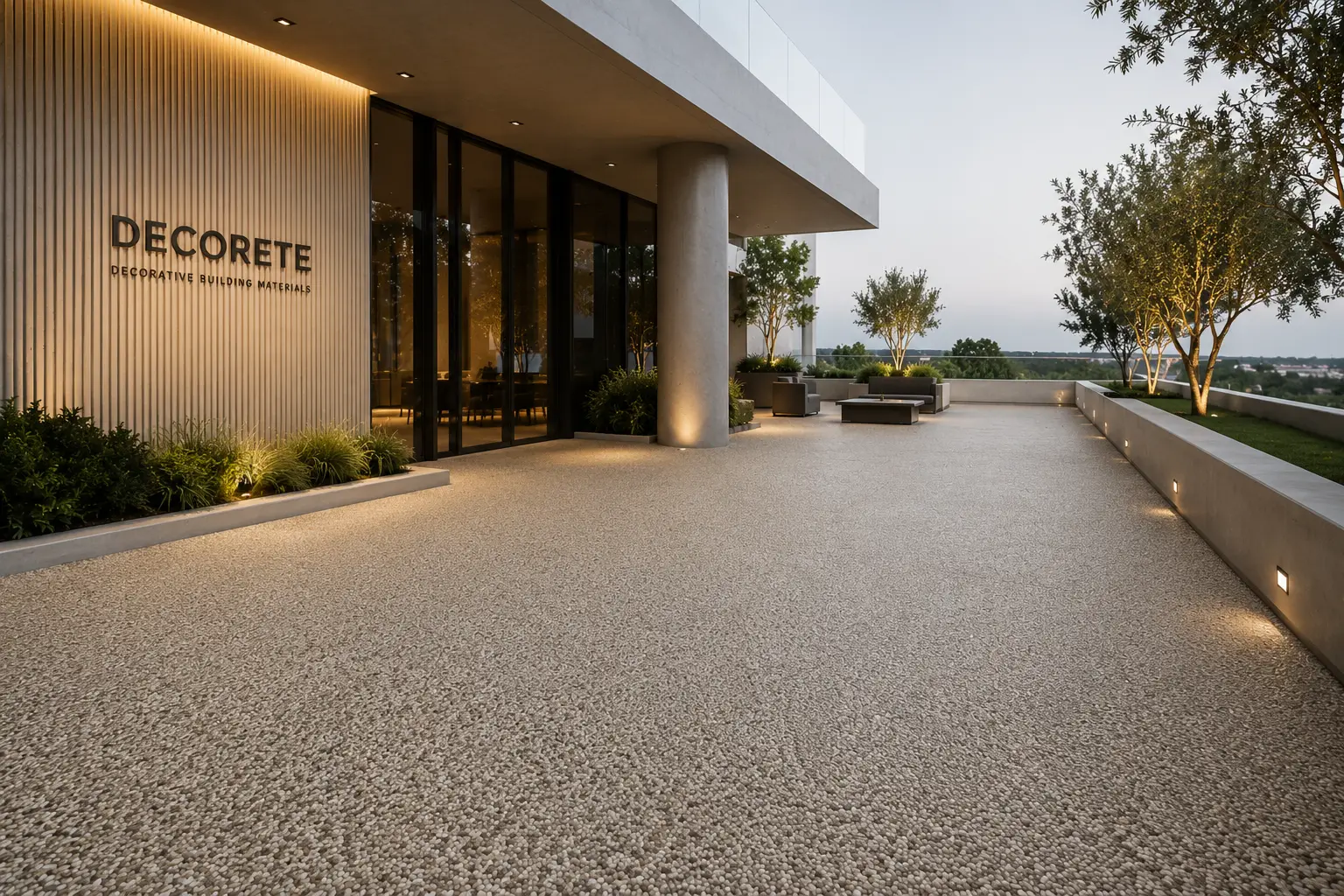
Decorete provides decorative surface solutions designed for modern architectural and finishing applications. With the right product, preparation, application method, and finishing process, decorative surfaces can become an integral part of the project's design rather than simply a functional layer.
Whether you are working on a residential renovation, commercial interior, hospitality project, or architectural development, understanding the characteristics of the selected system is essential before installation.
Final Thoughts
Stone carpet offers a distinctive alternative to conventional flooring finishes by combining decorative stone aggregate with a resin-based binder to create a textured, continuous-looking surface.
Its natural appearance, design flexibility, and potential for both interior and selected exterior applications make it an attractive option for modern architectural projects.
The key to achieving a high-quality result is not only choosing the right aggregate and resin system but also ensuring proper substrate preparation, correct application, professional detailing, and adequate curing.
For designers and contractors looking to create contemporary spaces with a natural and distinctive flooring character, stone carpet is a solution worth considering.